
🚀 Release
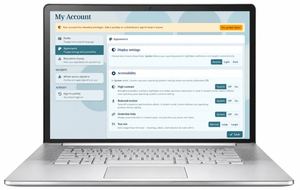
The August Release of our Multilingual Knowledge System puts a strong focus on security and a more modular administration experience. We have enhanced authentication for non-SSO users with Passkeys and 2FA, added insights into recent sign-in activity, and strengthened the handling of API keys.
At the same time, user management and profiles have moved into the new Authentication module, while repository configuration and data management remain in the Dashboard for now. These changes are part of our preparations for ISO 27001 certification and follow a deeper review of Coreon’s code security, authentication, and key management—laying the foundation for a more secure, intuitive, and modular Coreon.
💡 EU Project: Subprocessor Watch
Every cloud host or analytics vendor a service provider brings in adds another link to the chain of parties handling personal data. If a single subprocessor stores data in an inadequately protected third country, the whole arrangement may no longer be compliant.
Together with our Danish partner Wult, we tested whether a multilingual privacy law knowledge graph helps LLMs catch these risks. It did. The plain LLM only called a data transfer to China “concerning.” The knowledge-graph-supported LLM correctly flagged it as disqualifying.
Find out how the demonstrator works and where you can see it live this November.
🎙️ Events
tekom (10-12 November)
We have a lot to show at our tekom booth this year: First and foremost, the new, improved UI of our Multilingual Knowledge System with a reworked graph logic and various capabilites we’ve brought back. Along with that, you can directly test Coreon’s new search algorithm – just ask Michael or Carina for a demo at Coreon’s usual booth 2D01.
On top of that, we are happy to show you a demonstrator that can identify and classify subprocessors and potential related problems in a privacy policy document. This project was developed together with Wult, a Danish company operating in the field of compliance.
Just as in previous years, we’ll be exhibiting alongside Adapt Localization Services GmbH once again. This year, we’ll also be joined by Caron Publications AG.
Language Intelligence (17-19 November)
At LI 2026, on the 17th, Jochen contributes to Workshop 3 on “Language Intelligence for Knowledge Development in Civilian Security, Risk & Crisis Management” initiated by the Center for Risk and Crisis Management (CRC). The workshop explores the role of artificial and language intelligence in civilian security, risk and crisis management.
The workshop brings together industry, academic and public sector perspectives to discuss how structured knowledge representations can make AI and LLMs more reliable and useful in critical and regulated environments — and how these technologies affect the people and organizations that use them.
Further, on Thursday 19th, the focus is on the aforementioned Sub-processor Watch: Michael is going to demonstrate how Coreon and Wult use Multilingual AI and a Knowledge Graph to analyze privacy policies.
For this task, Carina tested different SOTA LLMs regarding Multilingual Information Extraction with datasets specifically designed for this. She also set up a Knowledge Graph in our Multilingual Knowledge System that maps the different policy regions, transfer mechanisms, data categories, and much more.
While most documents are written with clarity in mind, legal documents can be written to hide things. AI needs a multilingual knowledge structure, otherwise it is likely to raise false alarms and miss the real ones.
🥂 A Tribute to Gerhard Budin
An afternoon in Vienna … it was a great pleasure to attend the celebration in honour of Gerhard.
Gerhard’s inspiration has been fundamental to Coreon from the very beginning. Some may remember the EU-funded LISE project (2011–2013), which was academically hosted and led by Gerhard Budin and his institute. Under Gerhard’s academic leadership, and in collaboration with our academic and business partners, we recognised the unique power of concept systems —often referred to as #knowledgegraphs today — to organise and control large terminology resources, and to make that explicit knowledge available to other solutions — for instance via prompting LLMs or sharing it via MCP Servers.
Here are a couple of impressions from the afternoon, posted by the team from the Zentrum für Translationswissenschaft (University of Vienna).